
The idea of a “Work” record in Chordata is a record that represents intellectual property. A work is not the notes, it is not the paper, it is not the files, it is not the performances, and it is not the recordings. A Work is not necessarily even the “Music” in the air. A Work is a record that represents a piece of creative effort. Products are the things that we, the Publishers have agreed to create from Works, based on Contracts we enter into with Partners.
Chordata Works allow us to see groups of products together, even though they may be sold separately. From a work, we can spawn a product that represents the set. We can then spawn the score as a product which is for sale individually from the set. Both should be connected to the same work.
The existence and necessity of Works makes a single product spawned from a work slightly more complex than it would be if Works didn’t exist. Below is a map representation of the simplest work and product. The purpose of this document is to show how this added layer of complexity allows us to more elegantly define the relationships of musical compositions that inevitably grow over time.
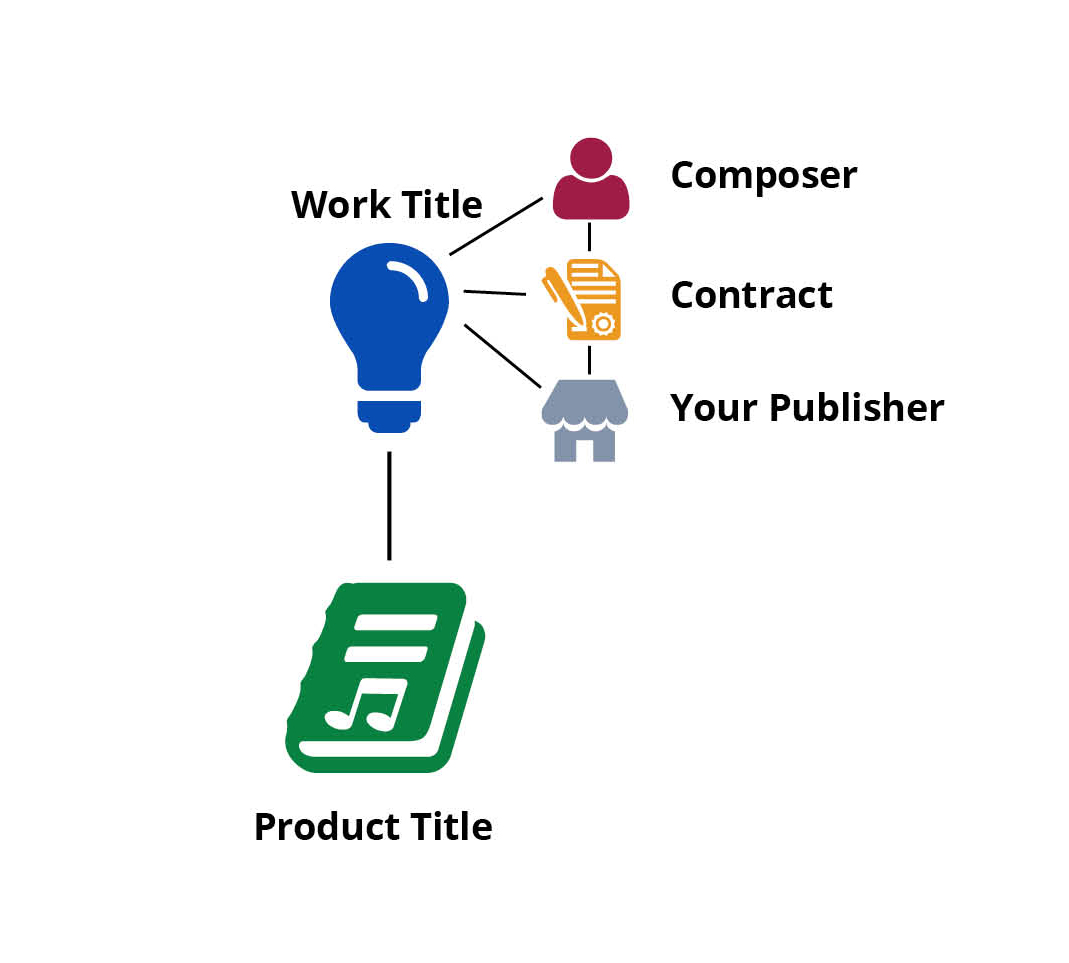
The simple unit above could have a number of things happen to it over its lifetime. Arrangements, editions or derivatives could be written including other partners, different instruments, or it could become part of a compilation. Having the Work record allows for these circumstances to come into existence without disrupting or confusing the original product.
Ensembles
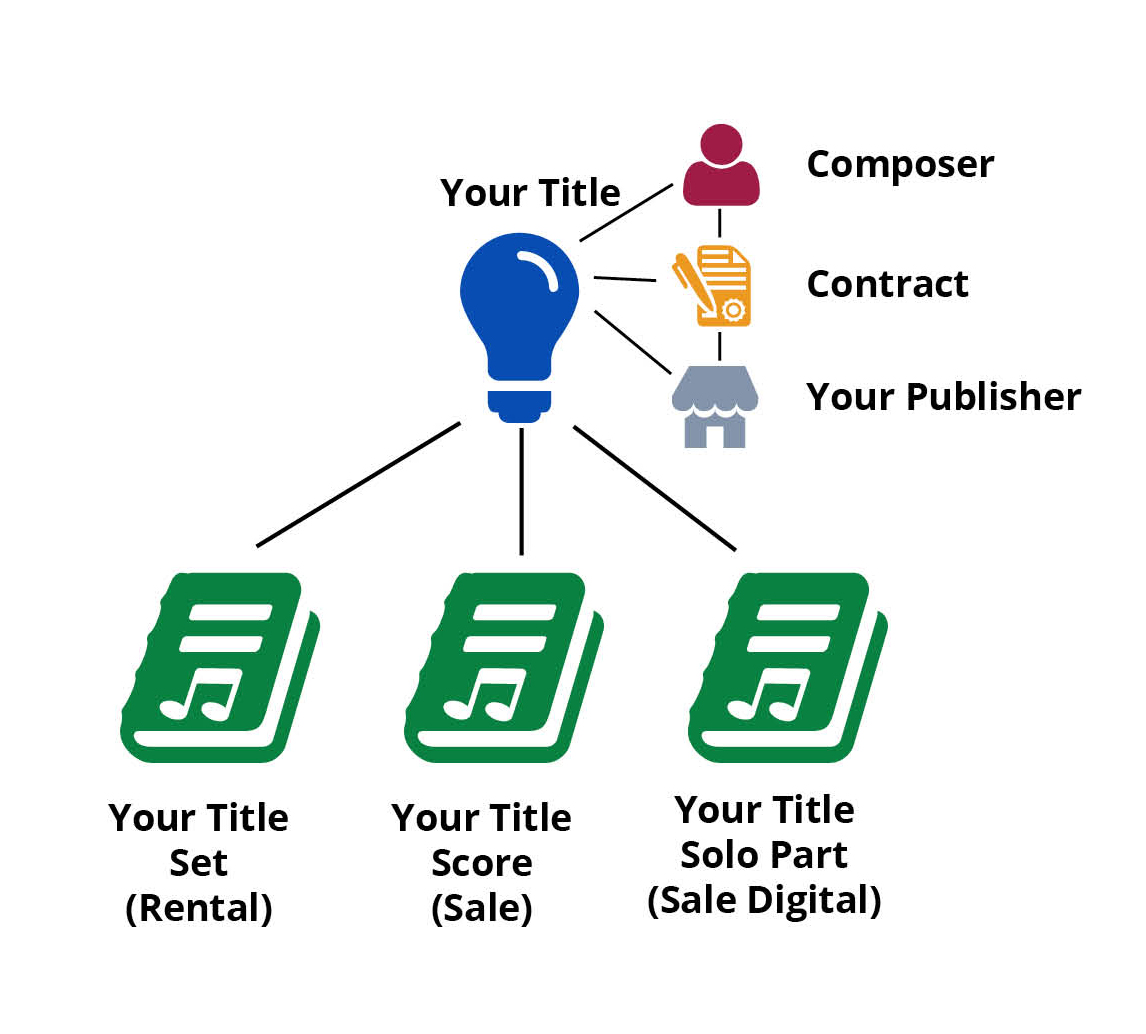
Chordata Works allow us to connect products together based on the underlying intellectual property, which might otherwise not be connected (or be unwieldy or misleading to present together). Below is a typical use case for a piece of music that has a set, a score and a part all available and grouped under a single work.
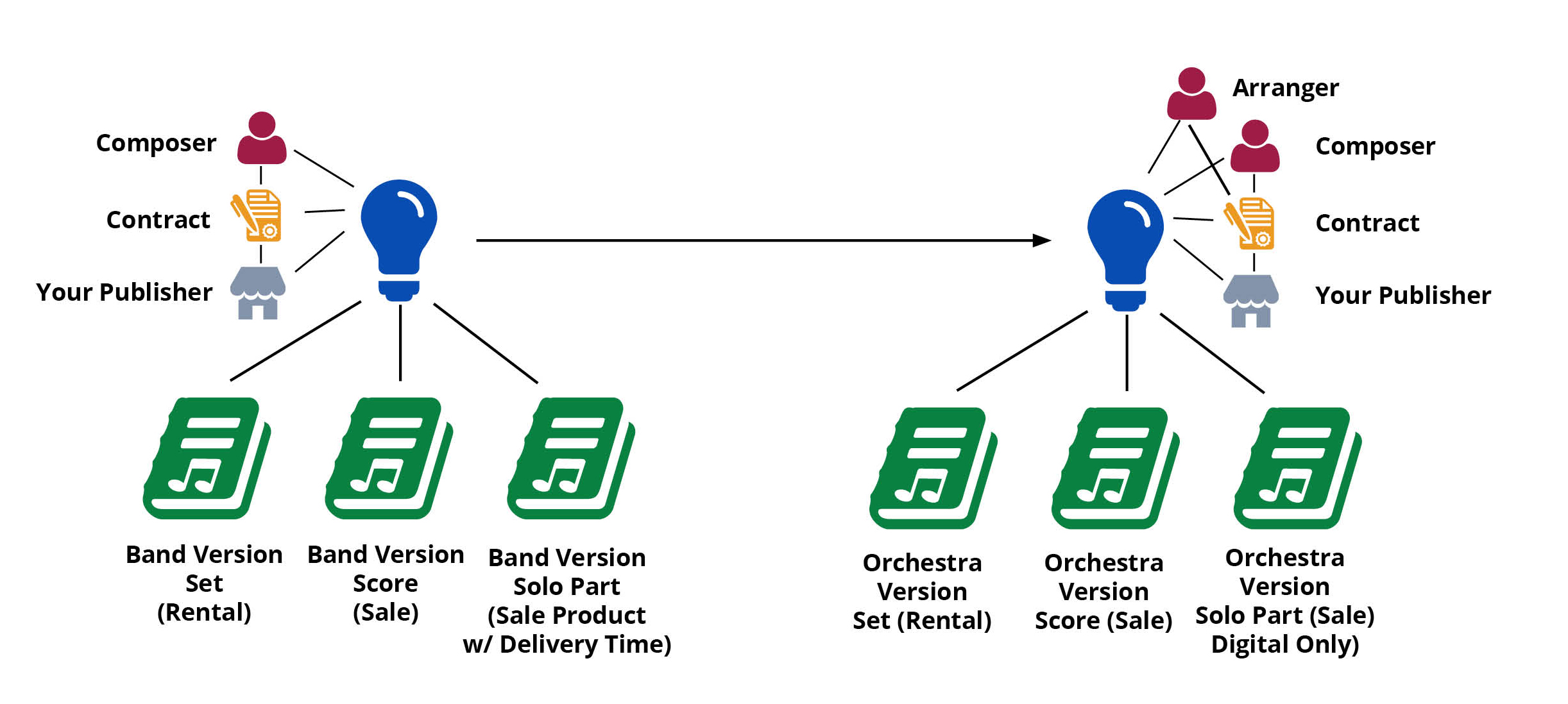
Case 1: We have a piece of music which has been adapted for both Concert Band and for Full Orchestra. Each of the ensembles requires creative effort to produce. Therefore each can be represented by Work records. The set and score Products are connected to their appropriate Work and not necessarily to each other (unless they happen to be compatible and could be performed together). In this case, the two Works should be connected to one another with a Work to Work connection. Work to work connections are directional. One is a derivative of the other. If one was produced before the other, chronologically, then the earlier work is typically defined as the parent and the later work is the child.
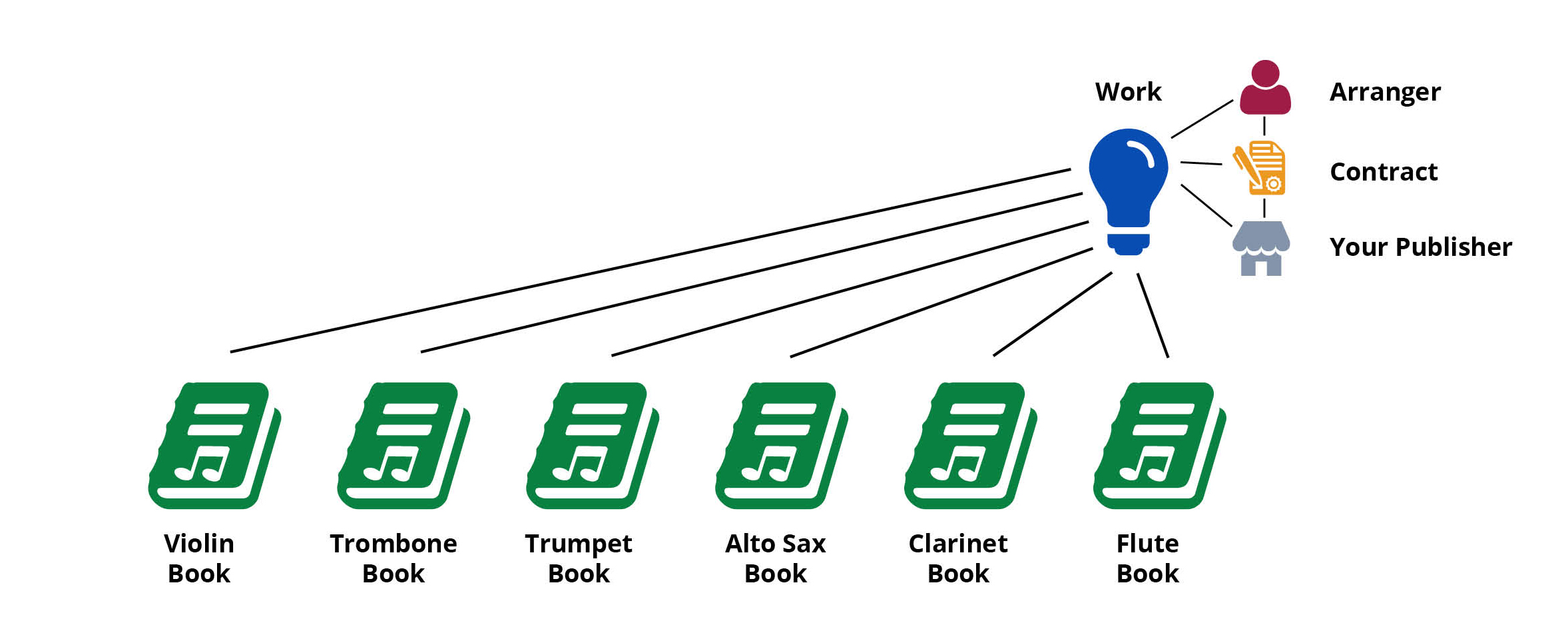
Case 2: We could have a piece of music or teaching material that someone wrote for several solo instruments. The work was intended to become a series of publications. The music was transposed for each of the instruments. In this case, we connect each of the instrumental Products to the same Work.
What is the difference between case 1 and case 2? Usually the decision to create separate works or not is a pragmatic one. It could be argued that Case 1 is really just 1 work with two sets of products, however, they may have different editors, requiring different contracts. They could have different release dates, different premiers and different reviews or awards. Having separate Work records for each allows us to keep that data separate.
Likewise, it is arguable that case 2’s series for solo instruments should have separate works that are connected together. However, no one instrument is the parent, there is only one Partner and Contract, and the Products will all be released together. The series was conceived as a single work and there isn’t a need for separate works.
What about Collections?
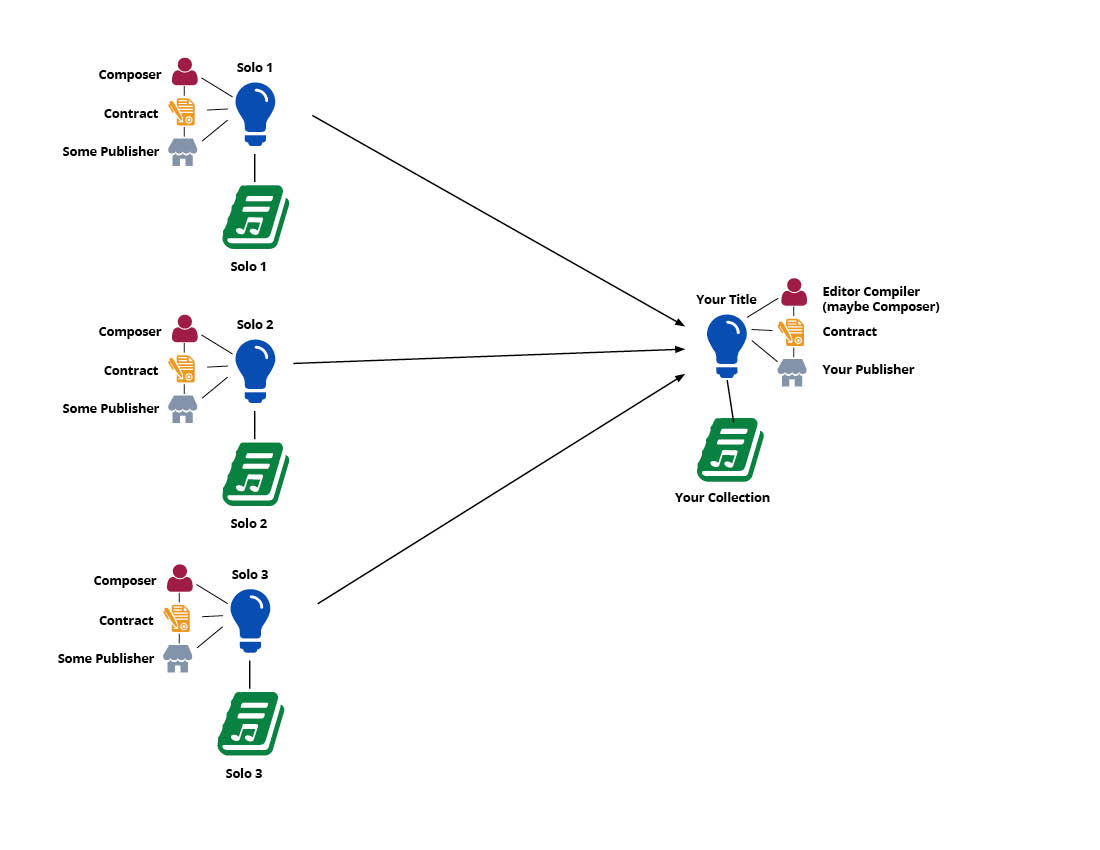
A Partner comes to us with a specific set of pieces in mind to produce as a collection. That Partner has curated the list. They are the compiler and that is a creative process requiring its own Work record.. The Work is created for that compilation based on that fact alone, however, they nearly always edit, arrange and write pieces to contribute as well. A compilation can have a mix of previously published music, and original music. The music can be and often is arrangements or editions of existing music. In nearly all cases, the collection is a single Work, that has parent works from the underlying pieces connected to it. They are often parent works, however, there can also be child works spawned from one or more of the pieces in the collection.
Conclusion
To sum it up, multiple Products connected to the same work can have mixed delivery methods, such as rental or for-sale products, or digital and print. Products related to the same work can be directly related to one another like score and set, they can be editions of one another like the same song for different voices or a new edition of an existing product with a new editor, they can be playable together, or they can simply be musically derivative. No matter the Product’s connections (which are typically based on compatibility) they can be seen simply by their Work connections. This structure allows us to keep track of intellectual property regardless of delivery method, attached partners, or musical compatibility. We are excited to see how this structure holds up when taking on new catalogs.